From the Journal · A short history
The Dunhill Rollagas
A London name, a Geneva workshop and a roller wheel that has hardly changed since the 1950s.
London and Geneva
Dunhill had been making lighters in London since the 1920s, but the Rollagas was a new kind of object: a slim, gas-fuelled pocket lighter, developed with the Swiss firm La Nationale of Geneva. It appeared in small numbers in 1953, entered the Dunhill catalogue in 1956 and went into full production the following year.
The roller
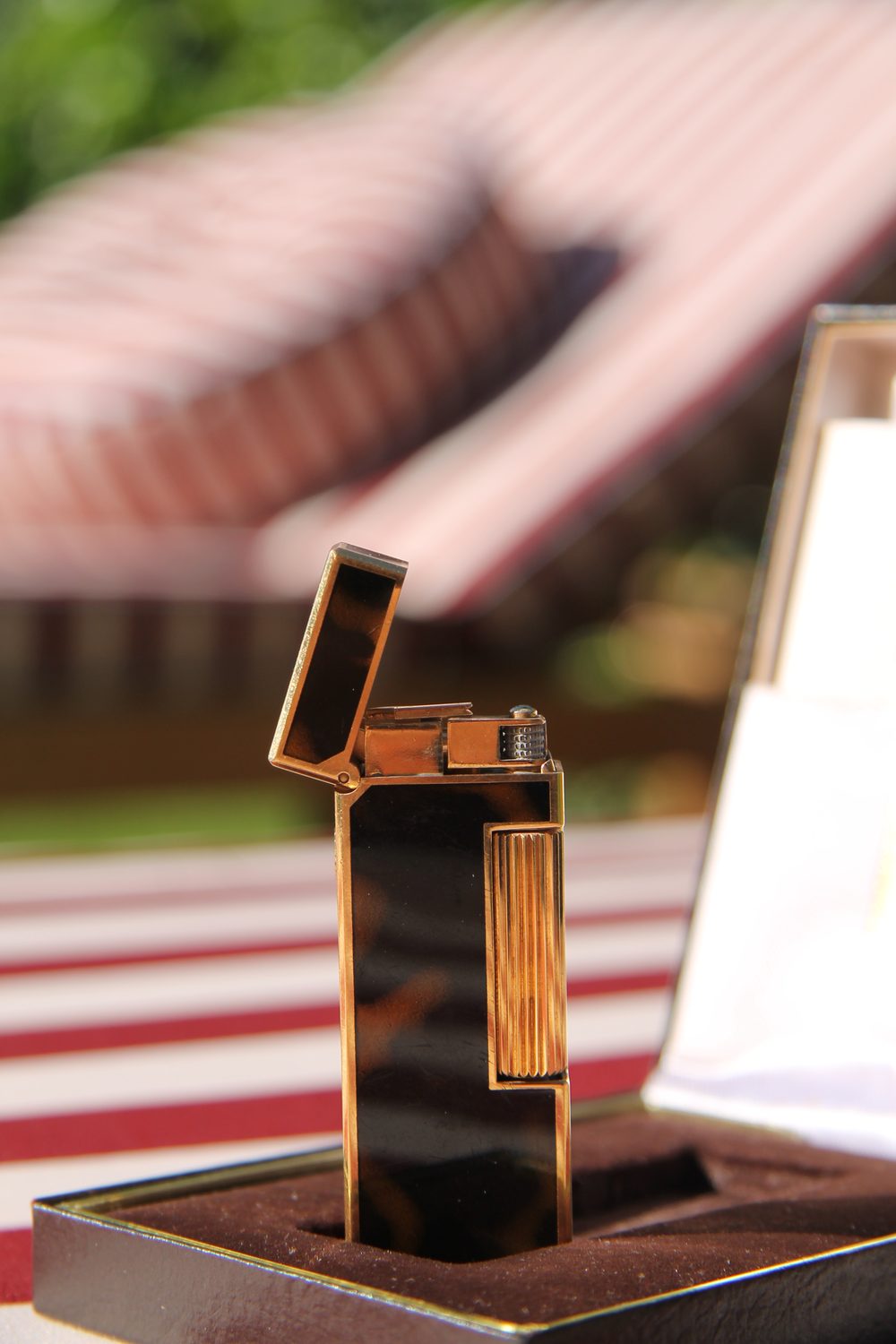
The design is built around its ignition: a ribbed wheel set into the side of the case, rolled with the thumb to strike the flint. The long, narrow body, the flip lid and that roller have stayed essentially the same through a very long production, which is why Rollagas lighters decades apart still look like members of the same family.
Finishes
Early Rollagas lighters were mostly plated metal with engraved patterns, such as barley and engine turning. Lacquered versions followed, in deep single colours and in patterned lacquers like tortoiseshell, set into a gold or silver frame. On a lacquered example it is worth checking the edges of each panel, where chips tend to start.
Dating one
The markings on the base are the first clue: the Dunhill name, patent references and, on later lighters, a serial number, which Dunhill added from the early 1990s. The box and papers help as well, since they changed style over the decades. An original box, booklet and guarantee, as with ours, make a lighter both easier to date and more desirable.
Looking after it
Use a good quality refined butane, let the lighter rest for a minute after filling, and keep a spare flint. Treated this way, a Rollagas will outlast its owner.
On our pages
Our Rollagas in tortoiseshell lacquer comes with its box, booklet and Dunhill guarantee.
Questions about a Dunhill of your own? Write to hello@thelightergazette.com.