From the Journal · A limited edition
The S.T. Dupont Révolution Française
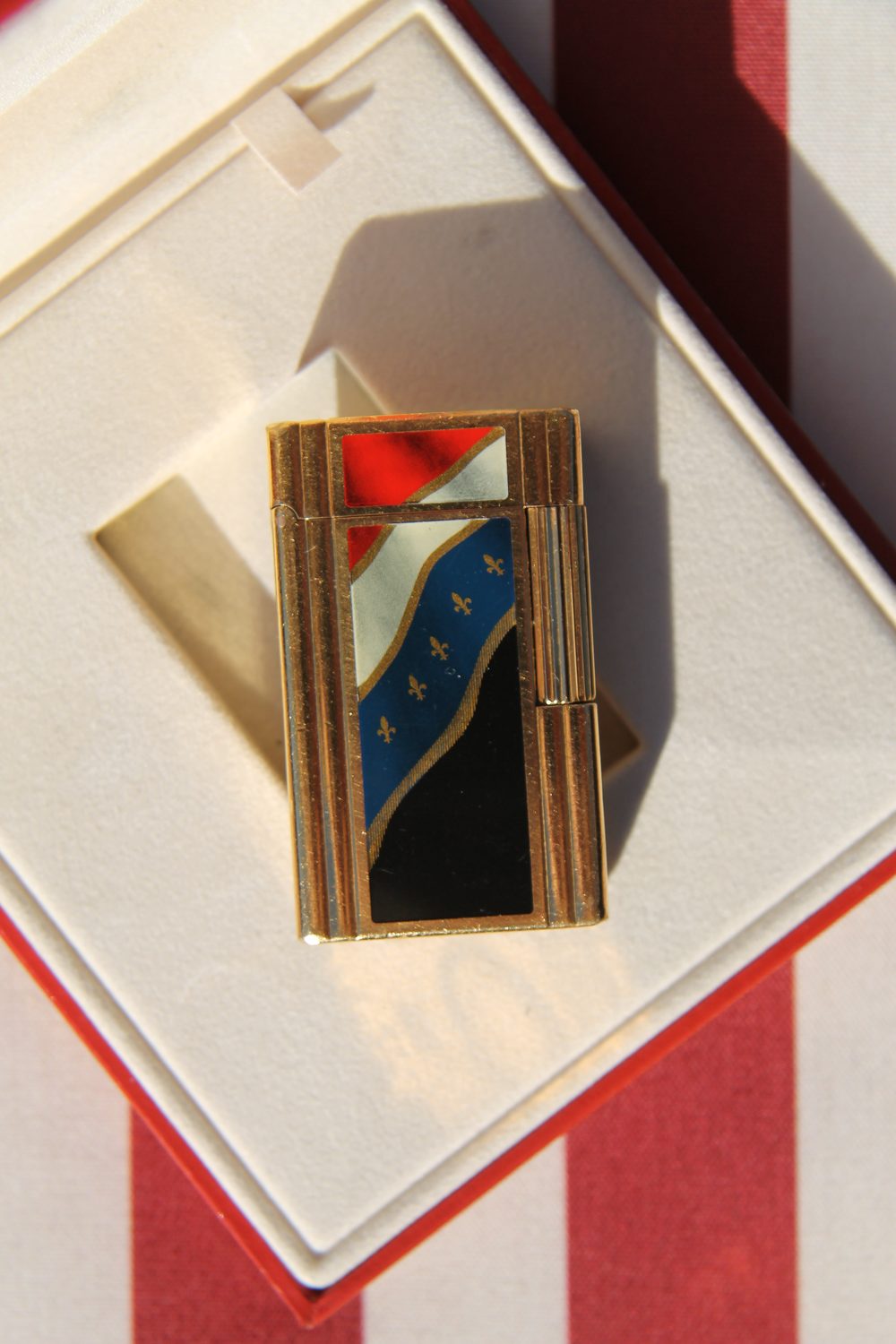
Two thousand numbered lighters for the two hundredth anniversary of 1789, with a tricolour that runs across the cap and down the case.
1989
In 1989 France marked two hundred years since the storming of the Bastille. On the evening of 14 July, Jean-Paul Goude’s parade filled the Champs-Élysées, and at the Concorde Jessye Norman, wrapped in the tricolour, sang the Marseillaise. S.T. Dupont, a Paris house since 1872, made its own contribution: a lighter issued in a limited edition of 2,000 pieces, each one numbered.
- Made
- 1989, for the bicentenary of the French Revolution
- Edition
- 2,000 numbered pieces
- Body
- Ligne 1, gold plate
- Decoration
- Lacquer in red, white and blue, with gold fleurs de lis
Reading the lacquer
The design is a flag in motion. A tricolour band crosses the front on the diagonal, red and white above, then a blue band sown with small gold fleurs de lis, and a black ground below. Each colour is held in by a fine gold line. The cap carries the red and white of the same band, so with the lighter closed the flag runs without a break. Around it is the familiar Ligne 1 case, with reeded sides and a reeded wheel.
The fleurs de lis are the interesting detail. They were the emblem of the French kings, the very thing the Revolution set out to remove, and here they sit inside the blue of the tricolour. Whether it reads as history or as irony, it is what makes the piece more than a flag on a lighter.
Not the only version
The bicentenary also appeared on a second Dupont design, sold as the Mosaïque: a geometric pattern of navy and crimson Chinese lacquer in a gold frame. It too carries an edition number out of 2,000. If you are buying from a description alone, ask for a photograph of the front so you know which of the two you are getting.
What to look for
Start with the lacquer. Chips tend to begin at the edges of a panel and along the gold lines, and lacquer is much harder to put right than plating. Then the corners and the base, where gold plate wears first. Check that the edition number is there and legible, and open the cap a few times: a clear, high note usually means a cap and hinge in good order. The original red box and papers add a good deal, to the value and to the story.
On our pages
Our Révolution Française comes in its original red presentation box. Write to us for more photographs or for its number.
Questions about a limited edition of your own? Write to hello@thelightergazette.com.